Capture purpose
Decide whether the system needs general video, a specific plate frame or both.
 IR & Project Lighting
Control Mode Comparison
Use continuous IR when the camera needs illumination across normal video frames and the scene can be lit steadily. Consider strobe IR when light should be synchronized to a defined capture event. The decision depends on camera exposure, trigger interface, vehicle movement, lane geometry and test results.
Decision First
Decide whether the system needs general video, a specific plate frame or both.
Confirm whether the camera or controller provides a compatible trigger output.
Review shutter strategy, vehicle speed and the exact capture position.
Consider duty cycle, heat, power, night-only control and maintenance.
Selection Snapshot
| Factor | Continuous IR | Strobe IR |
|---|---|---|
| Frame coverage | Supports ongoing night video | Targets selected capture events |
| Integration | Often simpler switching or photocell control | Requires trigger and timing compatibility |
| Motion strategy | Relies on camera exposure and steady light | Can concentrate light around a capture event |
| Commissioning | Check uniform scene coverage | Check timing, pulse behavior and plate exposure |
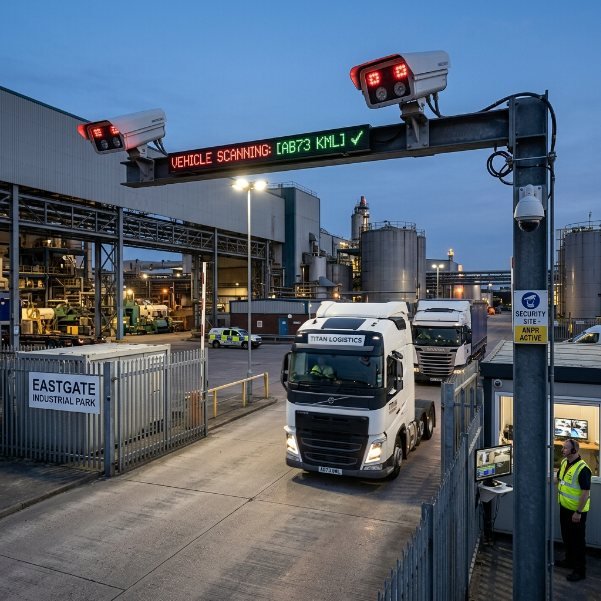
Continuous illumination is appropriate when operators or analytics need a consistently lit scene across video frames. It can suit CCTV monitoring, controlled entrances and some ANPR lanes when the camera exposure strategy works with steady light.
Selection still requires wavelength, beam, distance, housing and camera checks. Steady illumination does not guarantee motion detail if shutter speed and gain are not configured correctly.
Strobe illumination is considered when a camera or controller can coordinate a short light event with image capture. This can help concentrate illumination at a plate or vehicle capture point.
Compatibility is essential. Trigger electrical behavior, timing, capture frequency, duty cycle and camera exposure must be confirmed against the final model instead of inferred from a generic category description.
A project may use continuous light for overview video and a triggered light for a dedicated capture camera. Treat those as separate optical requirements even when they observe the same lane.
The integrator should define the required frames, camera roles and acceptance test. Accurates can support lighting selection, while final recognition and complete-system performance must be validated on site.
Project Recommendation
Send the camera model, trigger output, shutter approach and lane layout. We will help identify whether continuous, strobe or separate lighting roles should be tested.
Clear Answers
No. It can fit event-driven capture, but continuous IR may work in controlled lanes. The camera, exposure, trigger and lane determine the better direction.
It can support capture, but motion detail depends strongly on shutter, sensor, lens, plate reflection and available light. Test at representative speeds.
Sometimes, but the two cameras may need different beams, exposure and control. Define each camera's target before combining the requirements.
Share the camera roles, models, trigger outputs, shutter strategy, vehicle speed, capture point, lane drawing, wavelength, voltage and operating pattern.

